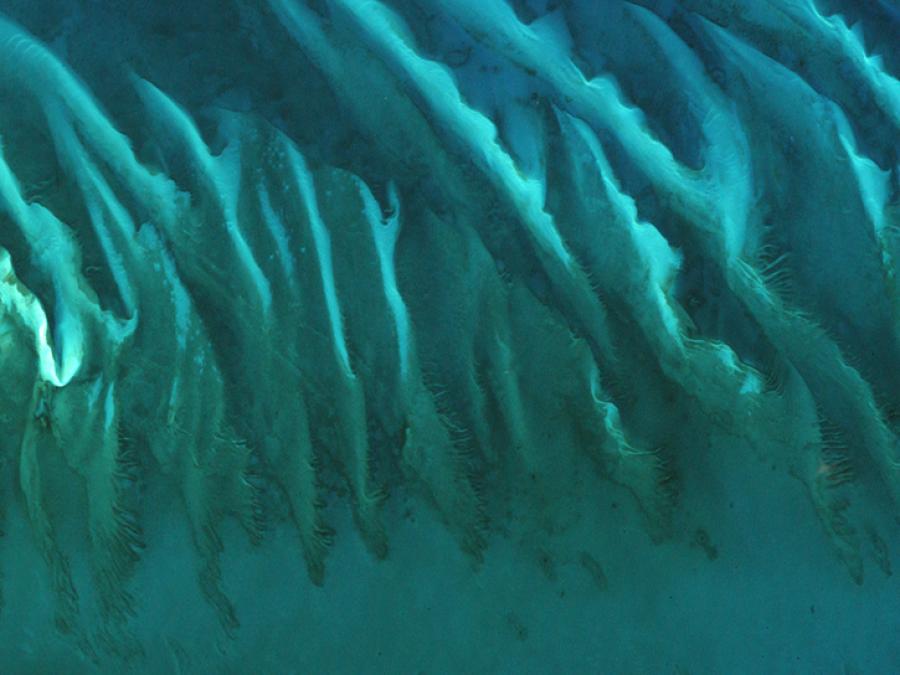
image of ocean current
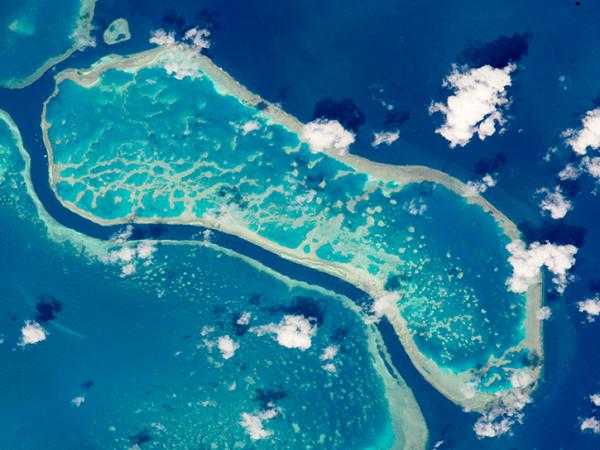
image of coral reef
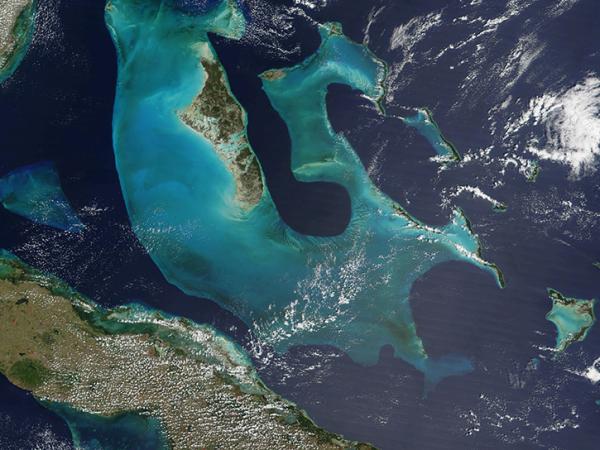
satellite image of the Bahamas

OB.DAAC

Ocean Biology DAAC

NASA deploys a number of Earth observing instruments that measure the spectral nature, or color, of water. Specifically, NASA acquires, archives, and publicly distributes such data from a variety of sources, including remote sensing ocean color instruments on satellite and airborne platforms, as well as similar measurements made on shipborne field campaigns, by long-duration autonomous in situ platforms, and derived as Earth system model outputs.

The Ocean Biology Processing Group (OBPG) at NASA's Goddard Space Flight Center has been operating and supporting the Ocean Color Web since 1996. 

As the Ocean Data Processing System Science Investigator-led Processing System (ODPS SIPS), our responsibilities include the collection, processing, calibration, and validation of ocean-related products from a large number of operational, satellite-based remote-sensing missions providing ocean color, sea surface temperature, and sea surface salinity data to the international research community. 

As the Ocean Biology Distributed Active Archive Center (OB.DAAC), we are responsible for the archive and distribution of satellite ocean biology data produced or collected under NASA's Earth Science Data and Information System (ESDIS), including those from historical missions and partner space organizations.

Ocean color is the apparent hue, shade, or tone of water that results from the interactions of sunlight with the microscopic composition of the water column and water itself. Typical relevant water constituents include phytoplankton, mineral particles, and dissolved organic matter. The color of the ocean varies with how these materials in seawater absorb and scatter photons of different wavelengths, which varies with their composition. For example, highly productive waters where phytoplankton are abundant can appear green, whereas less productive waters with fewer constituents typically appear blue.

The spectral nature of color of the water—that is, the intensity at which different wavelengths absorb and scatter photons—can be used to infer the quality and quantity of materials that comprise natural waters, allowing scientists, policymakers, and society as a whole to understand their composition on local to global scales. This understanding can lend insight into how aquatic organisms at the base of the food chain thrive or decline under changing conditions of their environments.

Ocean Biology Processing Group

NASA's Ocean Biology Processing Group (OBPG) supports the collection, processing, calibration, and validation of ocean-related products from a number of NASA, National Oceanic and Atmospheric Administration (NOAA), and international missions. These functions are supported within the framework and facilities of the NASA Ocean Data Processing System (ODPS) which has been successfully supporting operational satellite-based remote-sensing missions since 1996. The group's capabilities continue to evolve and expand to meet the demands and challenges of future missions.

Ocean Biology DAAC

The OBPG serves as a Distributed Active Archive Center (DAAC), responsible for archiving satellite ocean biology data produced or collected under NASA's Earth Science Data and Information System (ESDIS). Our holdings include a mixture of historical and current missions as well as data from both NASA and partner space organizations. Supported instruments, related information, and direct links to data can be found under the the "Supported Missions" tab.

SeaBASS

High quality in situ measurements are prerequisite for satellite data product validation, algorithm development, and many climate-related inquiries. The OBPG maintains the Sea-Viewing Wide Field-of-View Sensor (SeaWiFS) Bio-optical Archive and Storage System (SeaBASS), a public repository of in situ oceanographic and atmospheric data, to support their routine algorithm development and satellite data product validation activities.

SeaDAS

SeaDAS is a comprehensive software package for the processing, display, analysis, and quality control of remote-sensing Earth data. SeaDAS serves as the official distribution point of the NASA OBPG Science Software. This science processing component of SeaDAS applies the OBPG algorithms to satellite data in order to characterize and calibrate the data and generate science quality OBPG products. SeaDAS currently supports the science processing of more than 15 U.S. and international satellite missions. Additional coinciding ancillary data are used to correct for and calibrate out the atmospheric components of the signal in order to determine an Earth/ocean surface level signal. Customized algorithms can be developed and applied within SeaDAS to evaluate ocean, land and atmospheric data, as well as to produce True Color imagery. SeaDAS can also integrate SeaBASS format in situ data for comparative analysis with relevant satellite data. The latest version downloads, videos, tutorials, and documentation can be found on the SeaDAS website. More help and support can be found on the Earthdata Forum.

Field Support Group

The Ocean Ecology Laboratory (OEL) maintains an on-site Field Support Group (FSG) to conduct biological, biogeochemical, and interdisciplinary oceanographic research in collaboration with the OBPG. Through the FSG, the OEL sustains a cooperative field program mandated with advancing the state-of-the-art of in- and above-water optical and biogeochemical measurements, which are critical for calibration and validation of satellite radiometry and secondary data products and for refinement of ocean color algorithms. The FSG works within a global network of partnerships.
NASA's OB.DAAC archives data derived from many instruments and platforms. Often, users refer to a platform and instrument together — such as "PACE OCI" — as a mission. Explore the links below to learn more about how NASA satellite missions advance our understanding of ocean color.

InstrumentPlatform
CZCSNIMBUS-7
GLIMR 
GOCI COMS
HARP2PACE
HawkEyeSeaHawk
HICOISS
MERIS ENVISAT
MODISAqua
Terra
OCIPACE
OCTSADEOS-I
OLCISentinel-3A
Sentinel-3B
SeaWiFSOrbView-2
SPEXonePACE
VIIRSNOAA-20
NOAA-21
Suomi NPP

View a list of past meetings, workshops, and presentations led by OBPG members, and access details including agendas, slide decks, lists of attendees, and other documents.

CoreTrustSeal Certified Repository

We are proud to be a CoreTrustSeal Certified Repository. CoreTrustSeal is an international, community based, non-governmental, and non-profit organization promoting sustainable and trustworthy data infrastructures.

CoreTrustSeal Logo